 World of Shrimp
Shrimp molting: what a normal molt looks like and when it fails
Published · Updated · 6 min read
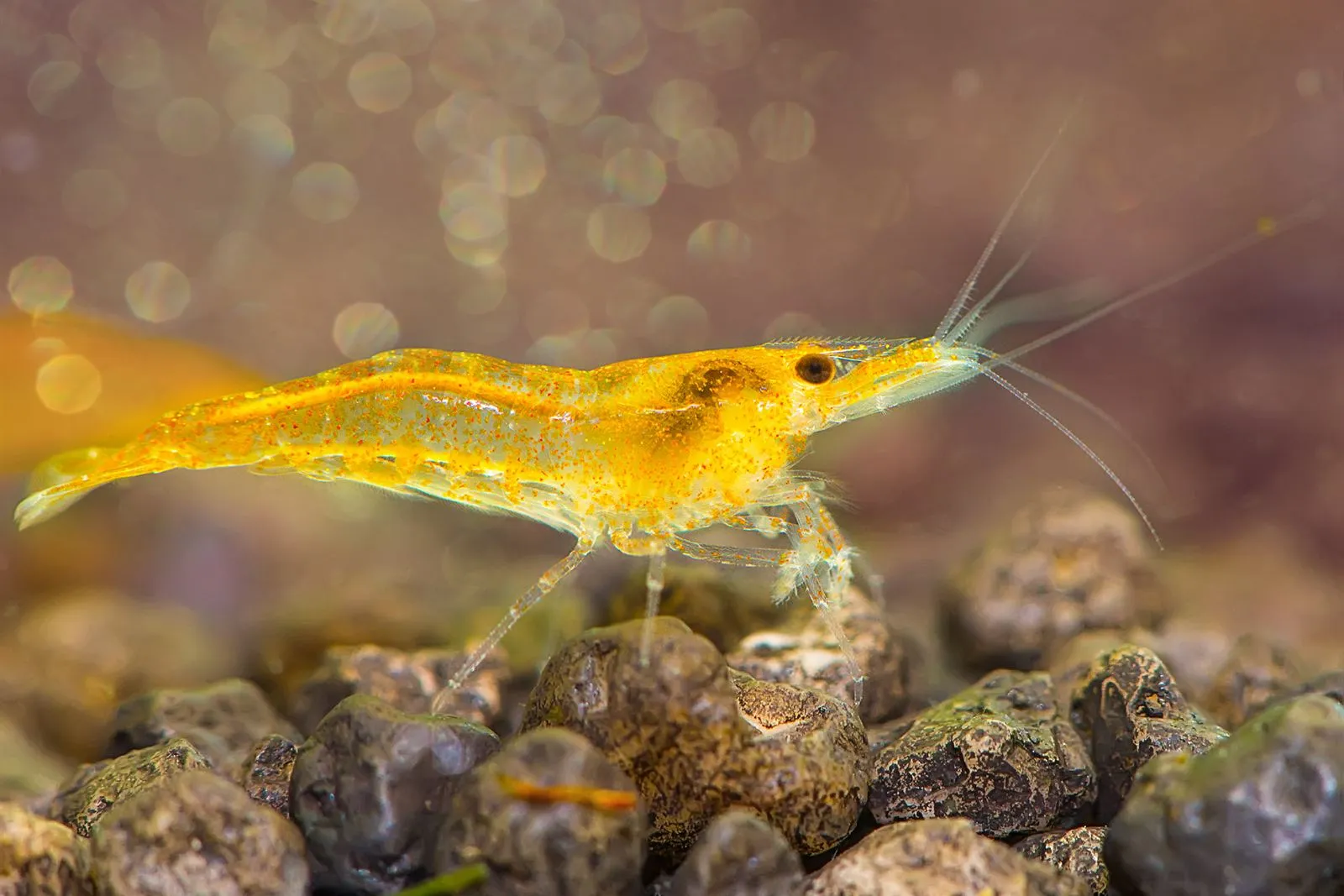
Quick answer
Shrimp grow by shedding their old shell, which is called molting. Adults molt about every 3 to 6 weeks, and young shrimp much more often. An empty, whole shell in the tank is a good sign, so leave it there: shrimp eat it for the minerals. A shrimp stuck in its old shell, often with a white ring behind the head, is a failed molt. The usual causes are sudden water changes and GH that is too low or too high.
What molting is
A shrimp's shell is hard and can't grow. To get bigger, the shrimp grows a new, soft shell underneath and then sheds the old one. This is called molting.
The shell is made largely of calcium. Before a molt, the shrimp takes some calcium out of the old shell to reuse it. After the molt, it needs more calcium and magnesium from the water and its food to harden the new shell.
That is why GH matters so much for shrimp. GH (general hardness) is the amount of calcium and magnesium in the water. Our water parameters guide explains it in more detail.
How often shrimp molt
Young shrimp grow fast, so they molt often. Adults molt less often. Guides give slightly different numbers:
| Age | How often they molt |
|---|---|
| Babies and young shrimp | Every few days to every 1–2 weeks |
| Adults | About every 3 to 6 weeks |
Age, temperature, food and water changes all affect the timing.
Before and after a molt
Before. A shrimp that is about to molt often sits very still for an hour or more. It may stop eating and barely move its feelers.
During. In a normal molt, the old shell opens at the back, just behind the head, and the shrimp climbs out.
After. The new shell is soft, so the shrimp hides until it hardens. Guides mention anywhere from about 12 hours to a few days. This is why plants and moss matter: they give a soft shrimp somewhere safe to wait.
Females also release a scent after they molt. It tells the males she is ready to mate, and they may swim fast laps around the tank looking for her. That is normal. Read more in our breeding guide.
What a normal molt looks like
A normal molt leaves an empty, see-through shell that looks like a ghost of the shrimp. It is often still in one piece. Beginners often mistake it for a dead shrimp. Look closely: a molt is hollow, and the shrimp itself is probably hiding somewhere.
Leave the old shell in the tank. Shrimp often eat it to get some of the minerals back. The only time to remove molts is during a parasite or bacterial problem, because the shell could carry it.
Signs of a failed molt
- A shrimp stuck halfway out of its old shell.
- A white ring around the body, where the head section meets the tail section. The shell has split all the way around instead of opening at the back. Shrimp keepers call this the "white ring of death".
- A shrimp lying curled up or on its side after trying to molt.
- A berried female (a female carrying eggs) dropping her eggs during a molt.
Not every pale line is a problem. Shortly before a normal molt, a thin line can appear behind the head. It is still joined at the bottom, and the shrimp behaves normally.
Sadly, a shrimp with a true white ring usually dies within a day or two. Trying to free it by hand rarely works, so focus on the cause to protect the rest of the colony.
What causes failed molts
| Cause | Why it matters |
|---|---|
| Sudden water changes | Big shifts in temperature, TDS, GH, KH or pH can push shrimp into a molt before they are ready. Shrimp guides often name this as the most common cause. |
| GH too low | Not enough calcium and magnesium to build a strong new shell. |
| GH too high | The shell can become too hard to break out of. |
| Ammonia or nitrite | Poor water in a new or overloaded tank stresses shrimp and disturbs molting. |
| Poor diet | Too few minerals and too little protein for a healthy new shell. |
TDS means total dissolved solids, everything dissolved in the water. KH (carbonate hardness) keeps pH steady.
How to prevent molting problems
- Keep GH in the range most guides suggest for cherry shrimp, about 4 to 8 dGH.
- Change small amounts of water, about 10 percent at a time, and match the temperature, GH and TDS of the new water. Our water change guide shows how.
- Add new water slowly.
- Top up evaporation with RO or distilled water, not tap water.
- Feed a varied diet, including some calcium-rich food such as blanched kale or spinach.
- Move new shrimp over slowly with drip acclimation.
If several shrimp die in a short time, read our guide to why shrimp die. Failed molts are often a sign of a wider water problem.
FAQ
Should I remove the molted shell from the tank?
No, leave it. Shrimp often eat their old shell to get back some of its minerals. Only remove molts if you are dealing with parasites or a bacterial infection, because the shell could carry the problem.
Why is my shrimp hiding after molting?
Its new shell is still soft, so it is easy to hurt. Shrimp usually hide until the shell hardens, which can take from several hours to a few days. Leave it alone and keep the water steady.
Is a white ring always a failed molt?
No. A thin pale line behind the head that is still joined at the bottom can appear before a normal molt, while the shrimp acts normally. A wide white band all the way around the body, with the shrimp stuck or barely moving, is a failed molt.
Why are my male shrimp swimming around like crazy?
A female has probably just molted. She releases a scent that tells the males she is ready to mate, and they search the whole tank for her. This is normal and stops on its own.
Sources
- Shrimp Science: Molting and Common Problems
- Shrimp Science: How To Breed Dwarf Shrimp
- The Shrimp Farm: Failed Molting in Shrimp
- Shrimp and Snail Breeder: Molting Process and Metabolism of the Dwarf Shrimp
- Shrimp and Snail Breeder: Dwarf Shrimp and Molting Problems: The White Ring of Death
- Shrimp and Snail Breeder: Shrimp Behavior: Why Do They Keep Swimming Around?
- Aquarium Co-Op: Care Guide for Cherry Shrimp
Keep reading
-
 Cherry shrimp water parameters: the numbers that matter
Typical ranges for temperature, pH, GH, KH and TDS, and what to do when a number is off.
-
 How to do a water change in a shrimp tank
How much water to change, how often, and how to do it without stressing your shrimp.
-
 Why are my shrimp dying? 8 common causes and what to check
The usual reasons shrimp die, and what to test first.