 World of Shrimp
Why are my shrimp dying? 8 common causes and what to check
Published · Updated · 8 min read
Quick answer
Most of the common causes of shrimp deaths have to do with the water, not disease. Test ammonia and nitrite first: both should read 0. Then think about what changed recently, such as a big water change, new shrimp added too fast, or a new medicine, fertilizer or food that may contain copper. Failed molts, overfeeding and heat are the next things to check.
One death or many?
Cherry shrimp only live about 1 to 2 years, so an occasional death in an older colony can be normal. Several deaths within a few days are different. They usually point to a problem with the water.
The causes below are listed roughly in the order worth checking.
1. An uncycled tank
A tank needs good bacteria to turn toxic ammonia and nitrite into much less harmful nitrate. In a new tank, those bacteria are still growing. Our tank setup guide explains how this "cycling" works.
Check: Is the tank less than about two months old? Do ammonia or nitrite read above 0?
Fix: Do small water changes with conditioned water, feed very little and test daily until both read 0. Don't add more shrimp until the tank is fully cycled.
2. Swings after a water change
Shrimp do not like sudden change. A big water change, or new water with a different temperature or hardness, can shock them. It can also upset the timing of their molt.
Check: Did the deaths start within a day or two of a water change? How much did you change, and did the new water match the tank?
Fix: Change smaller amounts, about 10 to 20 percent at a time. Match the temperature, always add conditioner, and add the new water slowly. Our water change guide shows how.
3. Rushed acclimation
Shrimp moved straight from the bag into a new tank can go into shock, even when the temperature matches. Differences in pH (how acidic the water is), GH and KH (two kinds of water hardness) and TDS (everything dissolved in the water) matter too.
Check: Did the deaths start within a few days of adding new shrimp? How were they added?
Fix: Next time, use the drip method in our acclimation guide. For the shrimp already in the tank, keep the water steady for now.
4. Copper and other chemicals
Copper is toxic to shrimp, even in tiny amounts. It can come from fish medicines, plant fertilizers, some fish foods, plants treated against snails and old copper pipes.
Other chemicals can kill shrimp too: soap on hands or buckets, sprays such as air fresheners near the tank, and chlorine or chloramine in tap water that was not treated with a conditioner.
Check: Did you add a new medicine, fertilizer, plant or food? Did you use a new bucket or spray anything nearby? Did you forget the water conditioner?
Fix: Do a large water change with conditioned, temperature-matched water as soon as possible. This is the one case where a big water change is worth it. A filter media made to remove copper can also help. If you have copper pipes, let the tap run for a couple of minutes before you fill a bucket.
5. Wrong GH or TDS and failed molts
Shrimp shed their shell to grow. This is called molting. Adults molt about every 3 to 4 weeks, and young shrimp much more often. Each new shell needs calcium and magnesium from the water, which is what GH measures.
When something is wrong, a molt can fail. You may see a shrimp stuck halfway out of its old shell. Or you may see a white ring around the body, just behind the head. Shrimp keepers call this the "white ring of death".
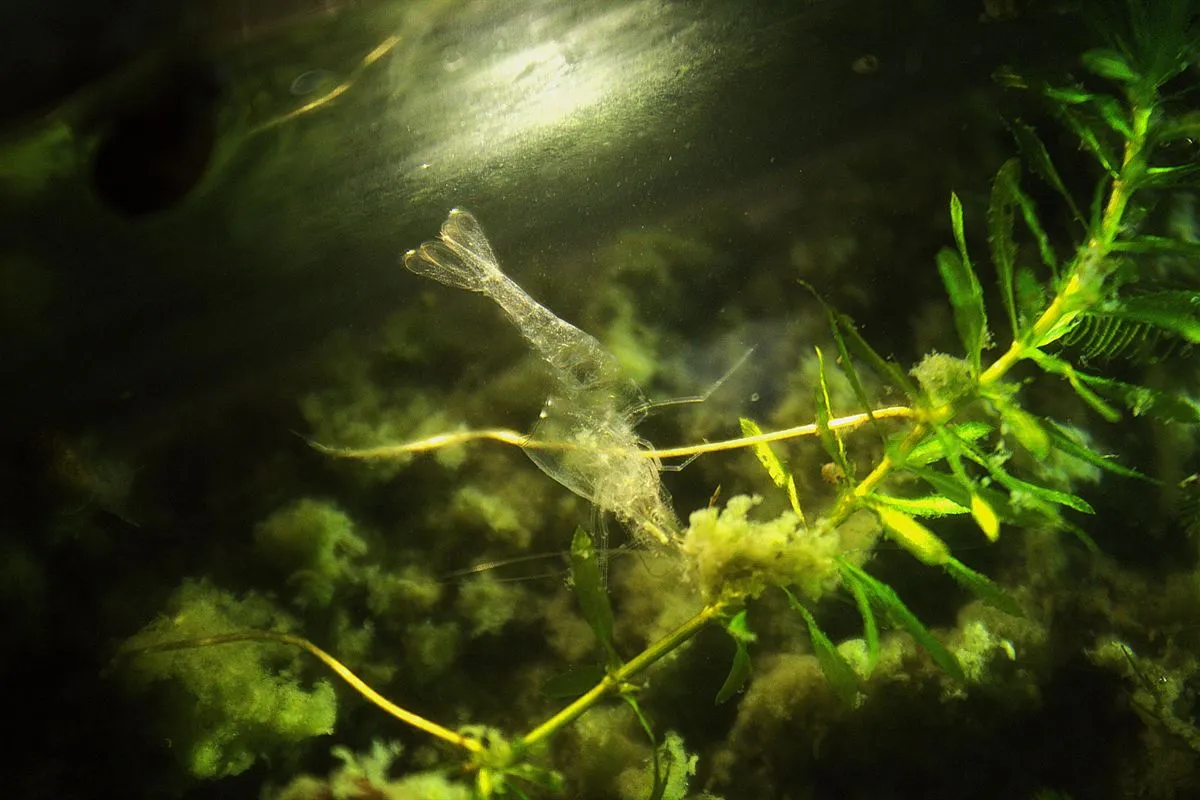
Check: Test GH and TDS, and compare them with our water parameters guide. Think about recent water changes, because sudden changes are a common trigger.
Fix: If GH is low, raise it slowly with a shrimp remineralizer. Keep water changes small and steady. A varied diet helps too. Our molting guide explains more.
6. Overfeeding and dirty water
Food that isn't eaten rots and turns into ammonia. So does a dead shrimp left in the tank.
Check: Is food still there after 3 hours? Is the water cloudy? Do you see small white worms (planaria) on the glass? Is nitrate high?
Fix: Feed less, remove leftovers and dead shrimp, and do a few small water changes. Our feeding guide shows how much to give. If you see planaria or hydra, read our guide to planaria and hydra.
7. Heat and low oxygen
Warm water holds less oxygen than cool water. Most guides say cherry shrimp tolerate up to about 28 °C (82 °F), and they live longer in cooler water. A hot room, direct sun or a heater set too high can push a small tank past that.
Check: Look at the thermometer, especially on hot days. Are shrimp crowding near the surface?
Fix: Cool the room and keep the tank out of direct sun. Add more surface movement with an air stone or sponge filter, which helps oxygen get into the water.
8. Stress from a new tank or tank mates
A brand new tank has little biofilm, the thin layer of algae and microbes that shrimp graze on. So they find less food and fewer places to hide. Fish add another kind of stress. Almost all fish will eat baby shrimp, and even small fish can be a risk for adults.
Check: How old is the tank? Are there fish in it? Do the shrimp hide all the time?
Fix: Give a new tank time to mature, and add plants and moss for cover. A shrimp-only tank, or one with snails, is the safest choice. See which tank mates are safe.
If you see this, check that
| If you see this | Check this first |
|---|---|
| Several deaths in a tank under two months old | Ammonia and nitrite. The tank may not be fully cycled. |
| Deaths within a day or two of a water change | How much you changed, and the temperature and hardness of the new water. |
| Deaths within a few days of adding new shrimp | How the new shrimp were acclimated. |
| Many shrimp dying suddenly at the same time | Copper or other chemicals: a new medicine, fertilizer, plant, food or spray. |
| A white ring behind the head, or a shrimp stuck in its old shell | GH, TDS and recent water changes. |
| Cloudy water, leftover food, white worms on the glass | Overfeeding and nitrate. |
| Shrimp crowding near the surface | Temperature, oxygen, ammonia and nitrite. |
| Male shrimp suddenly swimming wildly around the tank | Usually a female has just molted and the males are looking for her. This is normal if the other shrimp keep eating. |
What to do right now
- Remove dead shrimp. A rotting body adds ammonia to the water.
- Test ammonia, nitrite, nitrate, pH, GH, KH, TDS and temperature, and write the numbers down.
- Think about what changed in the last few days: water changes, new shrimp, plants, food, medicine or sprays.
- Fix the cause you find. Don't make lots of big changes at once in a panic, unless the cause is copper or another chemical.
- Feed lightly and test again the next day.
FAQ
Why did my shrimp die after a water change?
Usually because the new water was too different from the tank water, or too much was changed at once. Sudden shifts in temperature, TDS, GH or pH can shock shrimp and disturb their molting. Change about 10 to 20 percent at a time, match the temperature, use a conditioner and add the new water slowly.
Why are my shrimp at the top of the tank?
Shrimp crowding near the surface can be a sign of low oxygen or poor water. Test ammonia and nitrite and check the temperature, because warm water holds less oxygen. Adding surface movement with an air stone or sponge filter helps.
Is it normal for a few shrimp to die?
An occasional death can be normal, because cherry shrimp only live about 1 to 2 years. Several deaths within a few days are not normal and usually point to a water problem. Remove dead shrimp quickly, because a rotting body adds ammonia to the water.
Sources
- Shrimp Science: Why Are My Freshwater Shrimp Dying?
- Shrimp Science: Shrimp Tank Water Changes
- Shrimp Science: Red Cherry Shrimp care guide
- The Shrimp Farm: Failed Molting in Shrimp
- Aquarium Co-Op: Care Guide for Cherry Shrimp
- Shrimp and Snail Breeder: How Copper Affects Dwarf Shrimp
- Shrimp and Snail Breeder: Shrimp Behavior: Why Do They Keep Swimming Around?
- Shrimp and Snail Breeder: How Long Do Dwarf Shrimp Live
- Shrimp and Snail Breeder: Shrimp Feeding Guide: How Much, How Often, and When to Stop
- University of Florida IFAS Extension: Ammonia in Aquatic Systems
- U.S. Geological Survey: Dissolved Oxygen and Water
- City of Sioux Falls: Chloramines and Fish (PDF)
- Wikipedia: Neocaridina davidi
Keep reading
-
 Cherry shrimp water parameters: the numbers that matter
Typical ranges for temperature, pH, GH, KH and TDS, and what to do when a number is off.
-
 How to acclimate shrimp (drip method, step by step)
A slow, simple way to move new shrimp into your tank without shocking them.
-
 What and how often to feed shrimp
What shrimp eat, how much to give them and how to avoid overfeeding.