 World of Shrimp
How to buy healthy shrimp, in a store or online
Published · Updated · 6 min read
Quick answer
- Buy only when your tank has finished cycling.
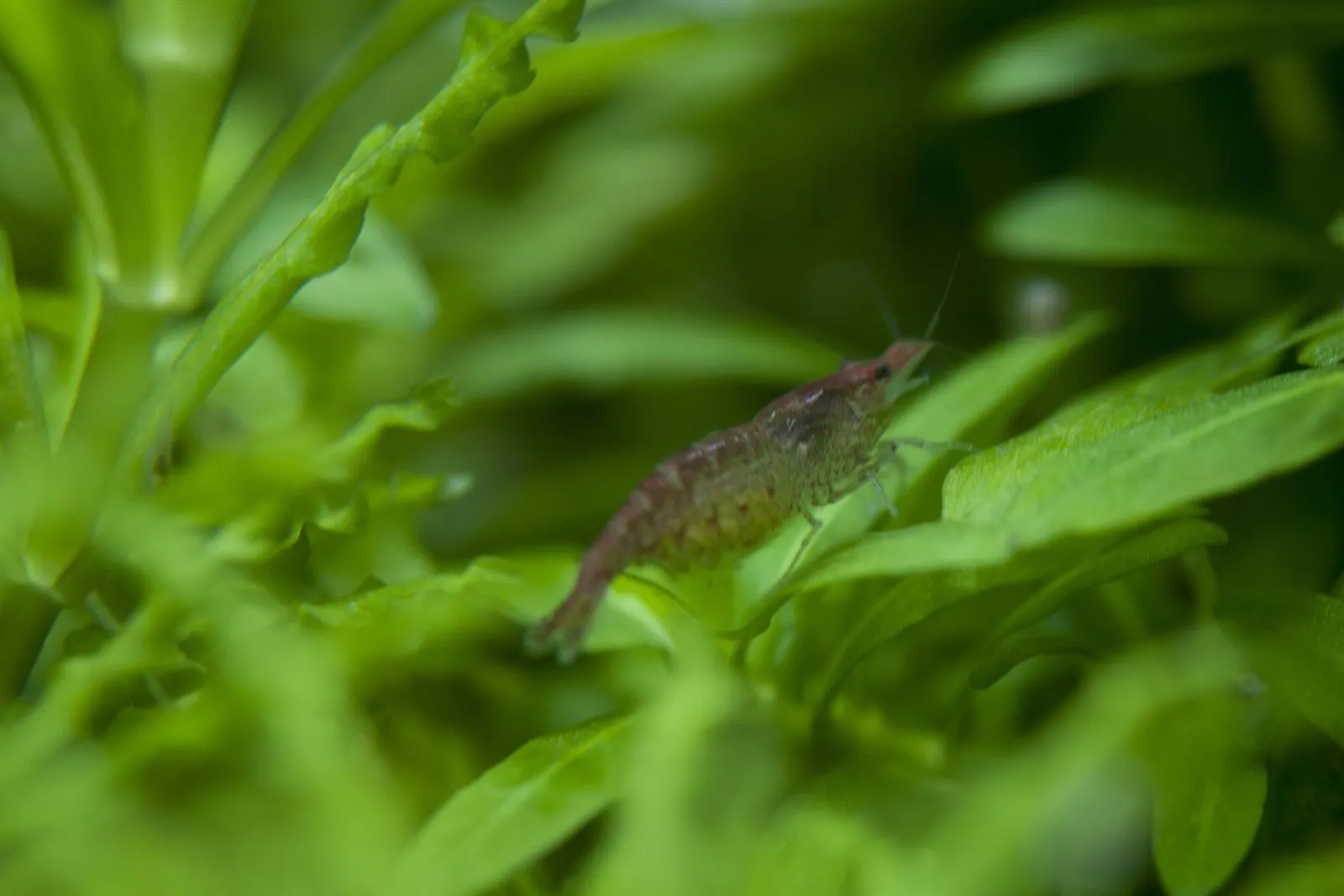
- Healthy shrimp graze all the time and come to food. Avoid tanks with dead shrimp, constant frantic swimming or white fuzz on the shrimp.
- In a store, ask what water the shrimp are kept in, so you can match it.
- Online, read the live arrival guarantee first, and be home for the delivery.
- On arrival, keep the lights dim, photograph the bags before you open them, and drip acclimate. Never pour the shipping water into your tank.
Before you buy
- Finish the cycle first. Ammonia and nitrite must read 0. See how to cycle a shrimp tank.
- Know your own water. Test GH (general hardness), KH (carbonate hardness), pH and TDS (total dissolved solids). The closer the seller's water is to yours, the easier the move.
- Plan for about 10 shrimp. Shrimp and Snail Breeder suggests keeping at least 10 together.
- Start with Neocaridina, such as cherry shrimp. Shrimp Science calls them the better choice for beginners. See Neocaridina vs Caridina.
What healthy shrimp look like
Watch the tank for a few minutes before you choose. Look at the whole group, not just one shrimp.
| Check | Healthy | Warning sign |
|---|---|---|
| Behavior | Grazing most of the time, small arms moving as they pick at surfaces | Constant frantic swimming, or one shrimp lying still for hours |
| Feeding | Comes to food quickly | Ignores food |
| Color | Even, strong color for its variety | Faded color, or a milky white body |
| Body | Clean, smooth shell | White fuzz around the face or on the body |
| The tank | No dead shrimp, and some females carrying eggs | Several dead shrimp on the bottom |
Some of these need a little context. Shrimp Science notes that hiding is normal, and that males swimming around after a female has just molted is normal breeding behavior. A milky white body can be a sign of muscular necrosis, which Shrimp Science describes as fatal. White fluff around the face is often vorticella, which it says needs quarantine. Females carrying eggs are a good sign, because Shrimp and Snail Breeder notes that stressed shrimp breed little or not at all.
Buying in a store
- Ask what water the shrimp are kept in. GH, KH, pH and TDS are ideal. Even knowing whether the shop uses tap water or RO water helps.
- Ask how long they have been in the shop. Shrimp that have just arrived are still stressed from their own trip.
- Ask for shrimp from a tank without dead shrimp, even if it means a different color.
- Get them home quickly. Keep the bag out of the sun and out of the cold.
Buying online
Shrimp travel well if they are packed properly, and online sellers often have more varieties. Before you order, check a few things:
| Check | Why it matters |
|---|---|
| Live arrival guarantee | It covers shrimp that die in transit. Flip Aquatics, for example, covers shrimp up to 7 days in transit, but not 8 days or more. |
| Claim rules | Flip Aquatics needs the claim on the same day the package is delivered, with a photo of the dead shrimp inside the unopened bag. |
| Delivery | Flip Aquatics says someone must be there at the first delivery attempt, or the guarantee no longer applies. |
| Weather | Ask how the seller packs shrimp in very hot or very cold weather. |
| Seller's water | Shrimp and Snail Breeder suggests asking for the water values the shrimp were kept in. |
The day they arrive
- Dim the lights. Shrimp spend the trip in the dark. Shrimp and Snail Breeder says never to open the box in bright light.
- Photograph the bags before you open them, especially if any shrimp look dead. Most guarantees depend on these photos.
- Even out the temperature. Shrimp and Snail Breeder floats sealed bags in the tank for about 15 to 20 minutes. Breathable bags should not touch the water. Leave them in the dim room for 30 to 60 minutes instead.
- Open the bag carefully. After a long trip, ammonia can build up in the bag and becomes more harmful once air gets in. Both Shrimp Science and Shrimp and Snail Breeder suggest a drop of a conditioner that binds ammonia, such as Seachem Prime.
- Drip acclimate. Drip tank water into the shrimp's container at about 1 to 2 drops per second, until the water has roughly tripled. This usually takes 1 to 3 hours. See how to acclimate shrimp.
- Net the shrimp into the tank. Never pour the shipping water in.
- Keep the tank lights off for about four more hours, and wait 12 to 24 hours before the first feeding.
The first month
Shrimp and Snail Breeder calls the first month the red zone, because most losses happen then. Stress from shipping, weak animals or earlier underfeeding can kill some shrimp even when everything else is done right. Losing one or two is not unusual. Losing several is a reason to test your water. See why shrimp die.
New shrimp often look pale at first. Shrimp and Snail Breeder lists shipping stress as a common cause of color loss. If they graze, eat and molt normally, the color usually returns as they settle in.
Shrimp Science advises quarantining any shrimp with white fuzz around the face right away. If you have a spare tank, keeping new shrimp in it for a few weeks before they join an existing colony lets you spot problems early. If losses continue with one seller, Shrimp and Snail Breeder suggests checking your own water and then trying a different seller.
FAQ
How many cherry shrimp should I buy to start?
About 10. Shrimp and Snail Breeder suggests keeping at least 10 together. A group that size will usually include both males and females, and a healthy colony grows from there.
Is it safe to buy shrimp online?
Usually, if the seller offers a live arrival guarantee and you are home for the delivery. Read the guarantee first. Flip Aquatics, for example, needs photos of the unopened bags and a claim on the same day the package arrives.
Why are my new shrimp pale?
Stress from transport and new water often makes shrimp lose color for a while. Shrimp and Snail Breeder lists shipping stress as a common cause of color loss. If they graze, eat and molt normally, the color usually comes back as they settle in.
When should I feed new shrimp?
Wait a little. Shrimp and Snail Breeder suggests waiting 12 to 24 hours after you add them before the first feeding. They graze on the surfaces in the tank in the meantime.
Sources
- Shrimp Science: Signs of Stress in Freshwater Shrimp
- Shrimp Science: How To Drip Acclimate Shrimp
- Shrimp Science: The Beginner's Guide to Freshwater Shrimp Tanks
- Shrimp and Snail Breeder: 8 Signs Your Shrimp is Suffering from Stress
- Shrimp and Snail Breeder: How I Drip Acclimate Shrimp and Why
- Shrimp and Snail Breeder: Red Cherry Shrimp: Detailed Guide
- Flip Aquatics: 100% Live Arrival Guarantee
Keep reading
-
 How to acclimate shrimp (drip method, step by step)
A slow, simple way to move new shrimp into your tank without shocking them.
-
 Why are my shrimp dying? 8 common causes and what to check
The usual reasons shrimp die, and what to test first.
-
 How to cycle a new shrimp tank, week by week
What the nitrogen cycle is, how to run a fishless cycle and when it is safe to add shrimp.