 World of Shrimp
Sponge filters for shrimp tanks: how they work and how to clean them
Published · Updated · 6 min read
Quick answer
- A sponge filter is a block of foam on a tube. An air pump sends bubbles up the tube, and the bubbles pull water through the foam.
- It is the most popular filter for shrimp tanks: gentle, cheap, and it cannot pull in baby shrimp.
- Choose one rated for a bigger tank than yours. Add a check valve if the pump sits lower than the water.
- Clean it only when the flow slows. Squeeze it in old tank water, never under the tap.
How a sponge filter works
An air pump sits outside the tank. It pushes air through thin airline tubing into the filter. The air rises as bubbles through a tube in the middle of the sponge, and the rising bubbles pull water in through the foam.
The foam does two jobs. It traps floating dirt. More importantly, it gives beneficial bacteria a large surface to live on. These bacteria break down ammonia from waste and leftover food. The cycling guide explains how they grow.
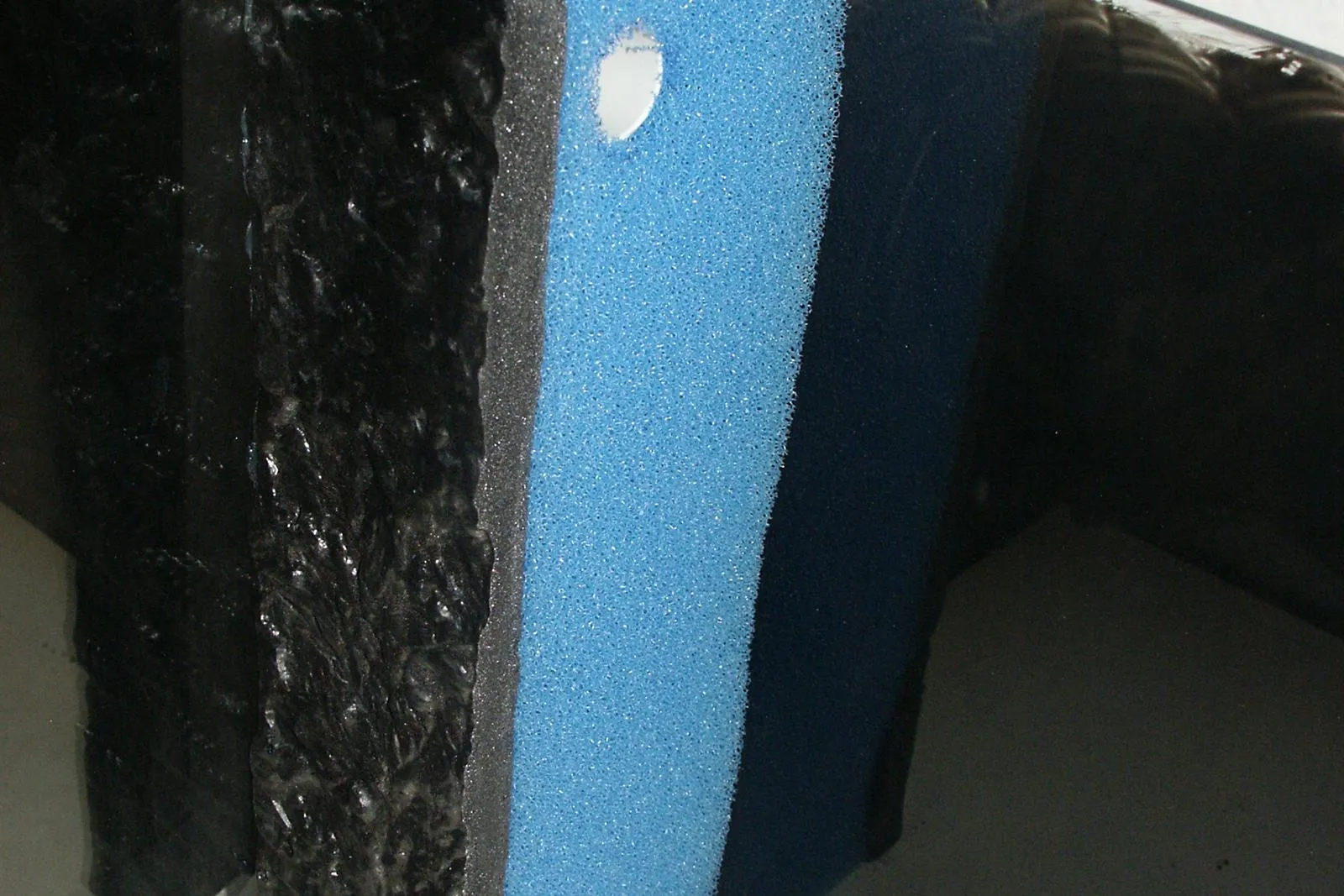
A corner mat filter, like the one in the photo, works the same way. It is simply a larger sheet of foam fixed across a corner of the tank. Flip Aquatics uses this kind of filter in its cherry shrimp tanks.
Why shrimp keepers use them
- Safe for baby shrimp. Water enters through the foam, so even tiny shrimp cannot be pulled in. Aquarium Co-Op calls sponge filters gentle enough for fry and shrimp.
- A place to graze. Shrimp pick food off the outside of the sponge all day.
- The usual choice. Shrimp Science calls it the most popular filter for shrimp tanks.
- Surface movement. The bubbles stir the water surface, which helps oxygen get into the water.
The downsides are small. The air pump makes a low hum, the bubbles make some noise, and the sponge takes up a little space in the tank.
What you need
| Part | What it does | What to look for |
|---|---|---|
| Sponge filter | Foam, a tube and a weighted base. | One rated for a bigger tank than yours. Shrimp and Snail Breeder suggests one rated for at least 20 gallons in a 10-gallon (38-liter) tank. |
| Foam grade | How coarse the foam is, given in ppi (pores per inch). | Aquarium Co-Op uses coarse 20 ppi foam, which clogs slowly. Shrimp and Snail Breeder suggests 25 to 30 ppi. |
| Air pump | Pushes air into the filter. | A small pump sized for your tank. |
| Airline tubing | Carries the air from the pump. | Enough to reach the pump with a little slack. |
| Check valve | Stops water running back down the tubing into the pump if the power goes off. | Needed when the pump sits lower than the water surface. |
Setting it up
- Put the filter together: the base, the sponge and the tube.
- Place it in a back corner and squeeze the sponge gently under water to push out trapped air.
- Set the height of the tube. Aquarium Co-Op suggests the outlet sits about one third above the water and two thirds below.
- Connect the tubing to the pump. If the pump stands lower than the water, fit a check valve in the line. Fit it the right way round: the air must flow from the pump toward the tank.
- Plug in the pump. You should see a steady stream of bubbles.
In a new tank, the sponge needs weeks to grow bacteria. Squeezing a sponge from an established tank into the new one gives it a head start.
How to clean it
A sponge filter needs very little care. Guides differ on how often to clean it:
| Guide | How often to clean |
|---|---|
| Aquarium Co-Op | About once a month, or when the bubbles slow down |
| Shrimp Science (cleaning guide) | Every couple of months, or when the water looks foggy |
| Shrimp Science (beginner's guide) | Every few months |
A simple rule: clean it when the flow of bubbles slows down or the water starts to look cloudy.
- Turn off the air pump.
- Lift the sponge out carefully. Slipping a bag or jug over it first keeps loose dirt from falling back into the tank.
- Squeeze it in old tank water, for example the water from a water change.
- Pour away the brown water and repeat until the water stays mostly clear. The sponge should not be spotless. The bacteria you want to keep live in it.
- Check for shrimp hiding in the sponge or the tube before you put it back.
- Put it back and switch on. Loose particles usually clear within about an hour.
Two things to avoid. Never rinse the sponge in untreated tap water, because chlorine and chloramine kill the bacteria. Never use soap. If your filter has two sponges, clean one at a time, a few days apart. A few days after cleaning, test ammonia and nitrite to make sure the bacteria are still keeping up.
When a sponge starts to fall apart, replace it. Shrimp Science suggests leaving the old sponge in the tank for a while next to the new one, so the bacteria can move across. Filter cleaning fits into a simple maintenance routine.
FAQ
How often should I clean a sponge filter in a shrimp tank?
When the bubbles slow down or the water starts to look cloudy. Guides suggest anywhere from about once a month to every few months. Squeeze it gently in old tank water, never under the tap.
Can baby shrimp get sucked into a sponge filter?
No. Water enters through the foam, so even tiny shrimp cannot be pulled in. That is one of the main reasons shrimp keepers use sponge filters. Check the sponge for shrimp before you put it back after cleaning.
Do I need a check valve for a sponge filter?
Yes, if the air pump sits lower than the water surface. Without one, water can run back down the tubing into the pump during a power cut. If the pump sits higher than the tank, it is optional.
Sources
- Aquarium Co-Op: Sponge Filters: The Easiest Fish Tank Filter Ever
- Aquarium Co-Op: 5 Ways to Cool Aquarium Water
- Shrimp Science: How to Clean a Sponge Filter
- Shrimp Science: The Beginner's Guide to Freshwater Shrimp Tanks
- Shrimp and Snail Breeder: Basic Shrimp Tank Setup for Neocaridina
- Flip Aquatics: Setting Up a Neocaridina Shrimp Tank: Beginner's Guide
Keep reading
-
 How to cycle a new shrimp tank, week by week
What the nitrogen cycle is, how to run a fishless cycle and when it is safe to add shrimp.
-
 Shrimp tank maintenance: a simple routine
What to check every day, every week and every month, and what to leave alone.
-
 Shrimp tank shopping list: what you actually need
The equipment a first cherry shrimp tank needs, what is nice to have and what you can skip.