 World of Shrimp
Best plants for a shrimp tank: 5 easy, low-light choices
Published · Updated · 5 min read
Quick answer
- Live plants grow biofilm, the thin layer of microbes and algae that shrimp eat, and they give shrimp places to hide.
- Five easy choices: Java moss, Anubias, Java fern, Bucephalandra and a floating plant such as water lettuce.
- None of them need special soil, and most grow in low light.
- Tie moss and other plants to wood or rock, and quarantine new plants before they go in.
Why shrimp need plants
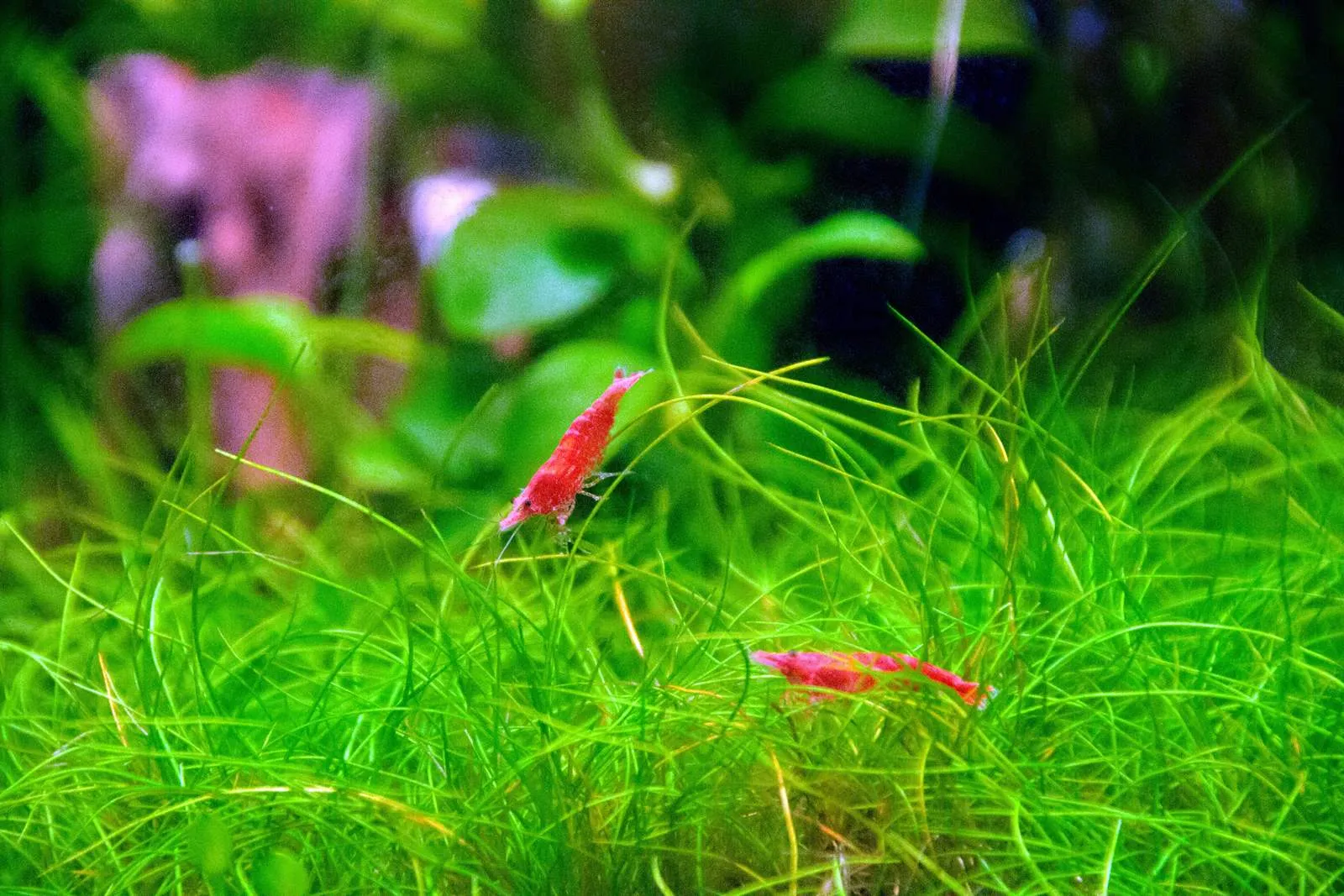
Plants are more than decoration in a shrimp tank. Their leaves and stems are covered in biofilm, a thin layer of bacteria, algae and tiny organisms. Biofilm is the main food of cherry shrimp, and a mature, heavily planted tank often gives them much of what they need.
Plants also give shrimp somewhere to hide. That matters most right after a molt, when a shrimp's new shell is still soft, and for babies, which are tiny and easy to catch. Some plants also take up waste such as ammonia and nitrate, although you still need regular water changes.
The 5 easiest plants
These plants are hard to kill, grow without special soil and suit a small tank.
| Plant | Light | How to plant it | Why shrimp like it |
|---|---|---|---|
| Java moss | Low to medium | Tie to wood or rock | Catches floating bits of food like a net, and gives babies and molting shrimp a dense place to hide |
| Anubias | Low | Attach to wood or rock | Broad, tough leaves that grow biofilm |
| Java fern | Low to moderate | Attach to wood or rock; don't bury it | Wide leaves with plenty of surface for biofilm |
| Bucephalandra | Low to high | Attach to wood or rock | Lots of leaf surface for biofilm |
| Water lettuce | Medium | Floats on the surface | Long roots to graze on and hide in; takes up ammonia and nitrate |
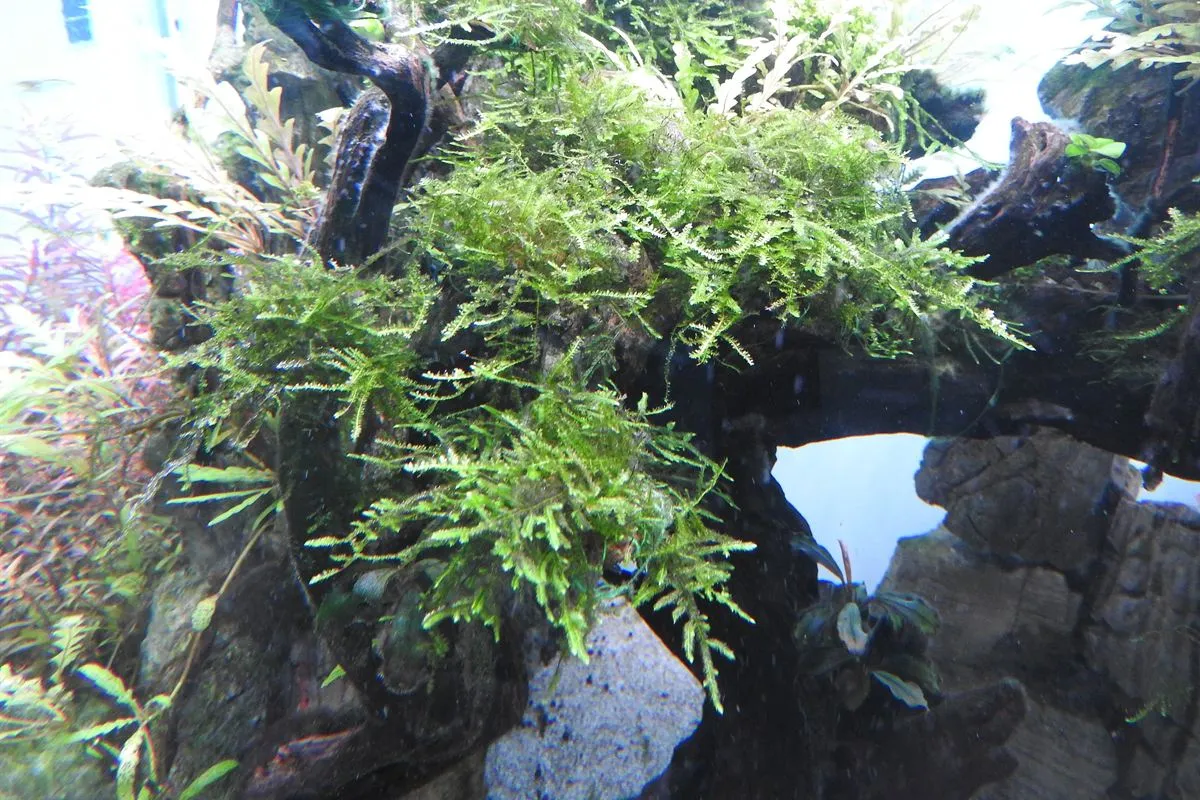
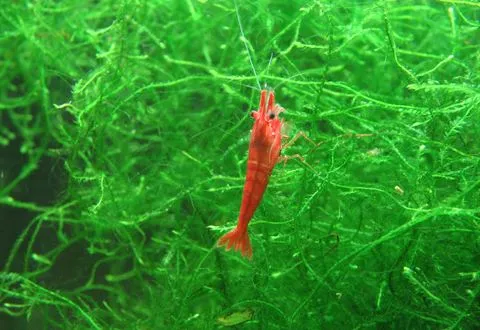
Java moss is the classic shrimp plant. Its dense, tangled strands catch bits of food, and baby shrimp and freshly molted shrimp hide inside it. Other mosses work in the same way.
Anubias is very hard to kill and grows well even in shade. You may read that its sap is dangerous to shrimp. Shrimp and Snail Breeder calls this a myth.
Java fern and Bucephalandra grow on wood and rock too. Java fern should not be buried in the gravel. Attach it to a stone or a piece of wood instead.
Floating plants such as water lettuce have long roots that hang down into the water. Shrimp, especially babies, graze on them and hide between them.
How to attach moss and other plants
Java moss, Anubias, Java fern and Bucephalandra don't need to go into the gravel. They grow on wood and rock, which also makes them easy to move later.
- Pick a piece of driftwood or a stone that fits your tank.
- Lay a thin layer of moss, or place the plant, where you want it to grow.
- Hold it in place with fishing line, cotton thread, a staple or a pin.
- Put the wood or stone in the tank. Moss attaches quickly, and the other plants grip with their roots over time.
Light and fertilizer
All five plants grow in low to medium light, so a simple LED aquarium light is enough. Light also grows algae on leaves and glass, which shrimp graze on. Too much light, though, can cause an algae outbreak that the shrimp can't keep up with.
Be careful with fertilizer. Many plant fertilizers contain copper, which is toxic to shrimp. Java moss, Anubias and Bucephalandra grow well without fertilizer. If you do use one, choose a product without copper or with very little, and start at half the dose.
New plants: rinse and quarantine
New plants can bring problems with them. Some are treated against snails with products that can contain copper. Others carry hitchhikers such as pest snails, hydra or planaria.
Rinse new plants well, and keep them in a separate bucket of water for at least a week before they go into the shrimp tank. If small white creatures do appear later, our guide to planaria and hydra explains what they are.
FAQ
Do cherry shrimp need live plants?
They can live without them, but live plants make life much easier for them. Plants grow biofilm for shrimp to eat and give them places to hide after molting. A tank with moss and a few easy plants is a good start.
Is Anubias safe for shrimp?
Yes. Anubias is one of the easiest plants for a shrimp tank, and Shrimp and Snail Breeder calls the idea that its sap harms shrimp a myth. Attach it to wood or rock instead of burying it.
Do I need fertilizer in a shrimp tank?
Usually not with easy plants like Java moss, Anubias and Bucephalandra, which grow well without it. Many fertilizers contain copper, which is toxic to shrimp. If you use one, choose a copper-free or low-copper product and start at half the dose.
Will shrimp eat my plants?
Healthy plants are usually safe. Cherry shrimp mainly eat biofilm, algae and decaying plant matter. If you see them picking at a leaf, they are usually grazing on the biofilm on it.
Sources
- Shrimp and Snail Breeder: Top 5 Plants for Your Shrimp Tank
- Shrimp and Snail Breeder: How Copper Affects Dwarf Shrimp
- Shrimp and Snail Breeder: Hydra in a Shrimp Tank: Treatment
- Shrimp and Snail Breeder: Planaria and Shrimps: How to Remove Them
- Aquarium Co-Op: Care Guide for Cherry Shrimp
- Flip Aquatics: Setting Up a Neocaridina Shrimp Tank: Beginner's Guide
- Shrimp Science: What Do Freshwater Shrimp Eat?
- Shrimp Science: Red Cherry Shrimp care guide
- The Shrimp Farm: Cherry Shrimp Feeding
Keep reading
-
 How to set up a 20-liter shrimp tank
Equipment, substrate, plants, water and cycling, in the order you need them.
-
 What and how often to feed shrimp
What shrimp eat, how much to give them and how to avoid overfeeding.
-
 Planaria and hydra in a shrimp tank: what they are and what to do
How to tell planaria, hydra and harmless detritus worms apart, and what to do about them.