 World of Shrimp
7 beginner mistakes with cherry shrimp (and how to avoid them)
Published · Updated · 4 min read
Short answer
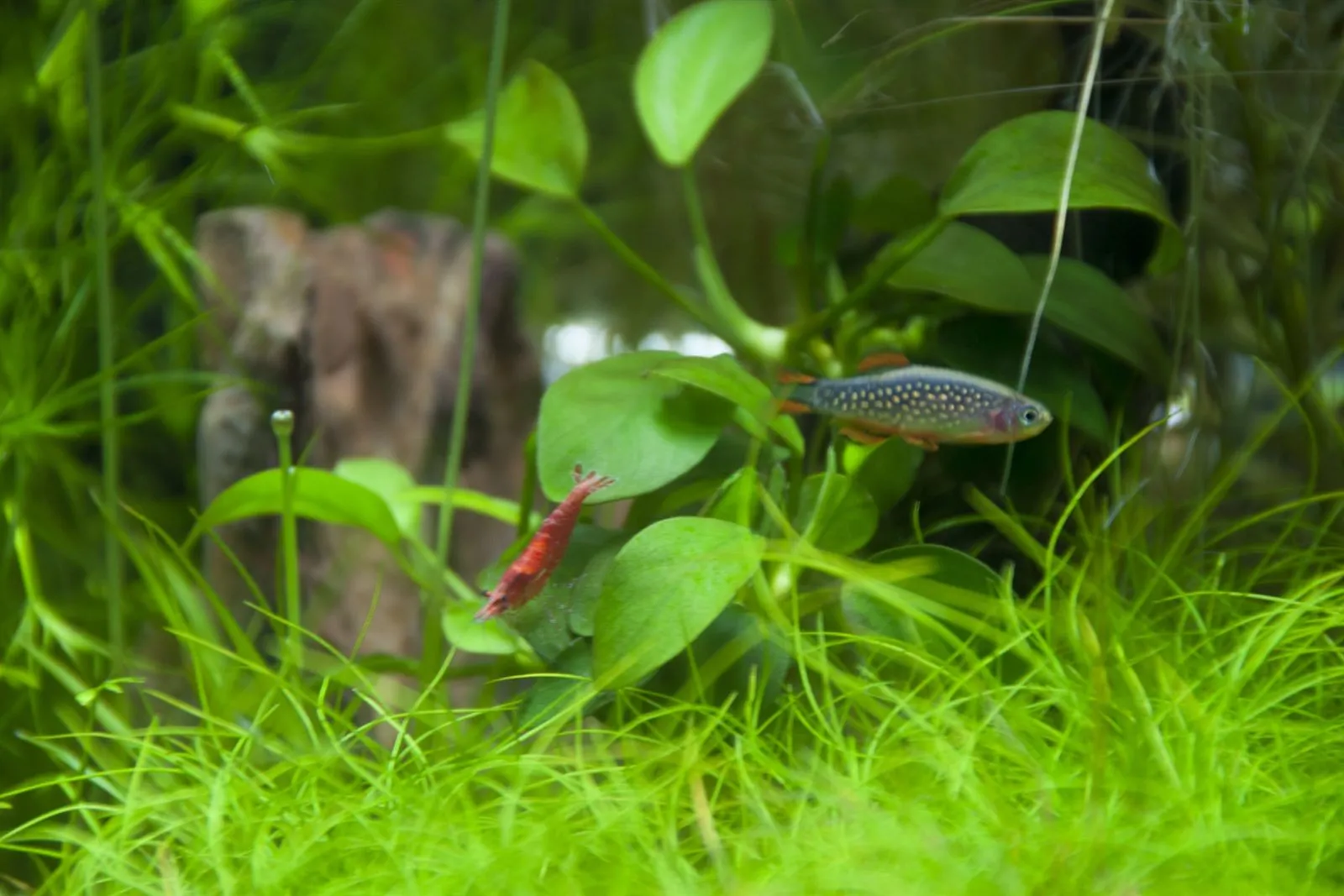
Most problems with new cherry shrimp come from a handful of mistakes: adding them to a tank that isn't cycled, moving them over too fast, big water changes, overfeeding, copper, hungry fish and topping up with tap water. Each one has a simple fix.
Cherry shrimp have a reputation as easy shrimp, and most of the time they are. But they are small and react badly to sudden changes, so a few habits from keeping fish cause trouble. These are the seven mistakes that shrimp care guides warn about again and again, roughly in the order a beginner meets them.
1. Adding shrimp before the tank is cycled
A new tank has no bacteria to break down waste yet, so ammonia and nitrite build up. Both are toxic to shrimp, even in small amounts.
Fix: cycle the tank first. Most shrimp guides say this takes about 4 to 6 weeks. Wait until ammonia and nitrite both read 0 before the first shrimp go in. Our tank setup guide shows how.
2. Pouring shrimp straight from the bag
Floating the bag only matches the temperature. The water inside can still have a very different pH (acidity), hardness and TDS (total dissolved solids) from yours, and a sudden switch can shock the shrimp.
Fix: drip acclimate. Let your tank water drip slowly into a container with the shrimp for about 1 to 2 hours. Our acclimation guide has the steps.
3. Changing too much water at once
A big water change shifts temperature, hardness and TDS all at the same time. That can upset the shrimp's molt, when they shed their shell to grow, and a failed molt is often fatal.
Fix: change about 10 to 20 percent at a time, match the temperature and add the new water slowly. See our water change guide.
4. Feeding too much
Shrimp graze on biofilm, the thin layer of algae and microbes on every surface, all day long. Extra food they don't finish rots and turns into ammonia. Cloudy water and small white worms on the glass are typical warning signs.
Fix: give only what they finish in about 2 to 3 hours, and remove the rest. Our feeding guide explains how much.
5. Copper in medicine, fertilizer or food
Copper is toxic to shrimp, even in tiny amounts. It hides in many fish medicines, plant fertilizers, some fish foods and plants treated against snails.
Fix: read every label before it goes in the tank, treat sick fish in a separate tank, and keep new plants in a bucket for about a week first.
6. Keeping shrimp with fish that eat them
Almost all fish will eat baby shrimp, and some will hunt the adults too. Even fish sold as "shrimp-safe" usually eat some babies. A colony in a busy community tank often never grows.
Fix: keep shrimp on their own, or with snails. Our tank mates guide lists the safer choices.
7. Topping up with tap water
When water evaporates, the minerals stay behind. If you top up with tap water each time, TDS and hardness slowly creep up, and that can lead to molting problems.
Fix: top up evaporation with RO or distilled water, and use tap water with conditioner only for real water changes.
A quick checklist
- Tank cycled: ammonia and nitrite at 0.
- New shrimp drip acclimated for 1 to 2 hours.
- Water changes of 10 to 20 percent, added slowly.
- Food gone within 2 to 3 hours.
- No copper in medicines, fertilizers or food.
- No fish that eat shrimp.
- Evaporation topped up with RO or distilled water.
If your shrimp are already dying, start with our guide to why shrimp die. It lists what to test first.
Sources
- Shrimp Science: Why Are My Freshwater Shrimp Dying?
- Shrimp Science: Shrimp Tank Cycling
- Shrimp Science: How To Drip Acclimate Shrimp
- Shrimp Science: Total Dissolved Solids (TDS) for Shrimp Tanks
- The Shrimp Farm: Failed Molting in Shrimp
- The Shrimp Farm: Cherry Shrimp Feeding
- Shrimp and Snail Breeder: Shrimp Feeding Guide: How Much, How Often, and When to Stop
- Shrimp and Snail Breeder: How Copper Affects Dwarf Shrimp
- Aquarium Co-Op: Care Guide for Cherry Shrimp
- University of Florida IFAS Extension: Ammonia in Aquatic Systems
Keep reading
-
 Why are my shrimp dying? 8 common causes and what to check
The usual reasons shrimp die, and what to test first.
-
 How to set up a 20-liter shrimp tank
Equipment, substrate, plants, water and cycling, in the order you need them.
-
 How to acclimate shrimp (drip method, step by step)
A slow, simple way to move new shrimp into your tank without shocking them.